Master’s Thesis / Consumer Behavior & International Marketing
Strategic Use of Symbolic Country of Origin Cues to Enhance Consumer Acceptance of Foreign Products: Evidence from Chinese Tea Packaging
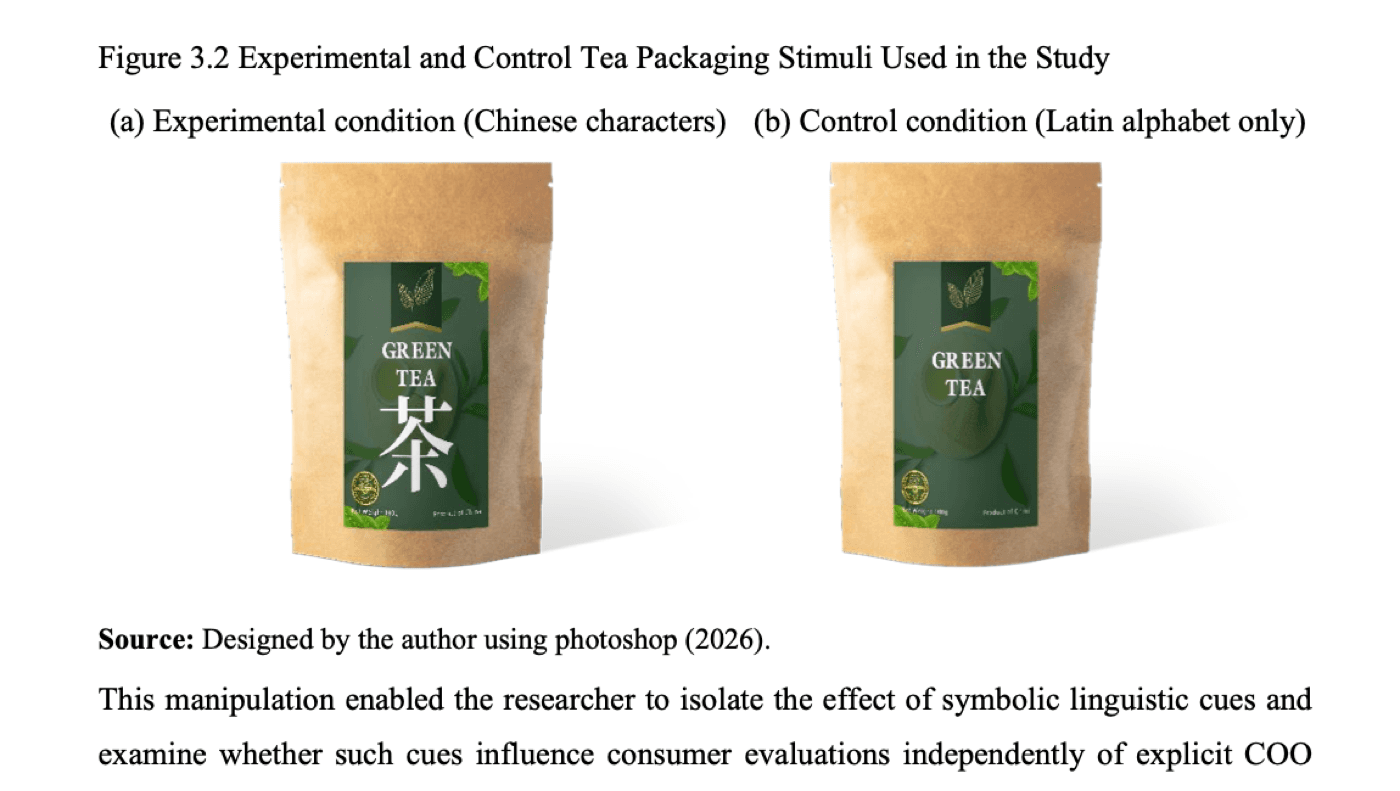
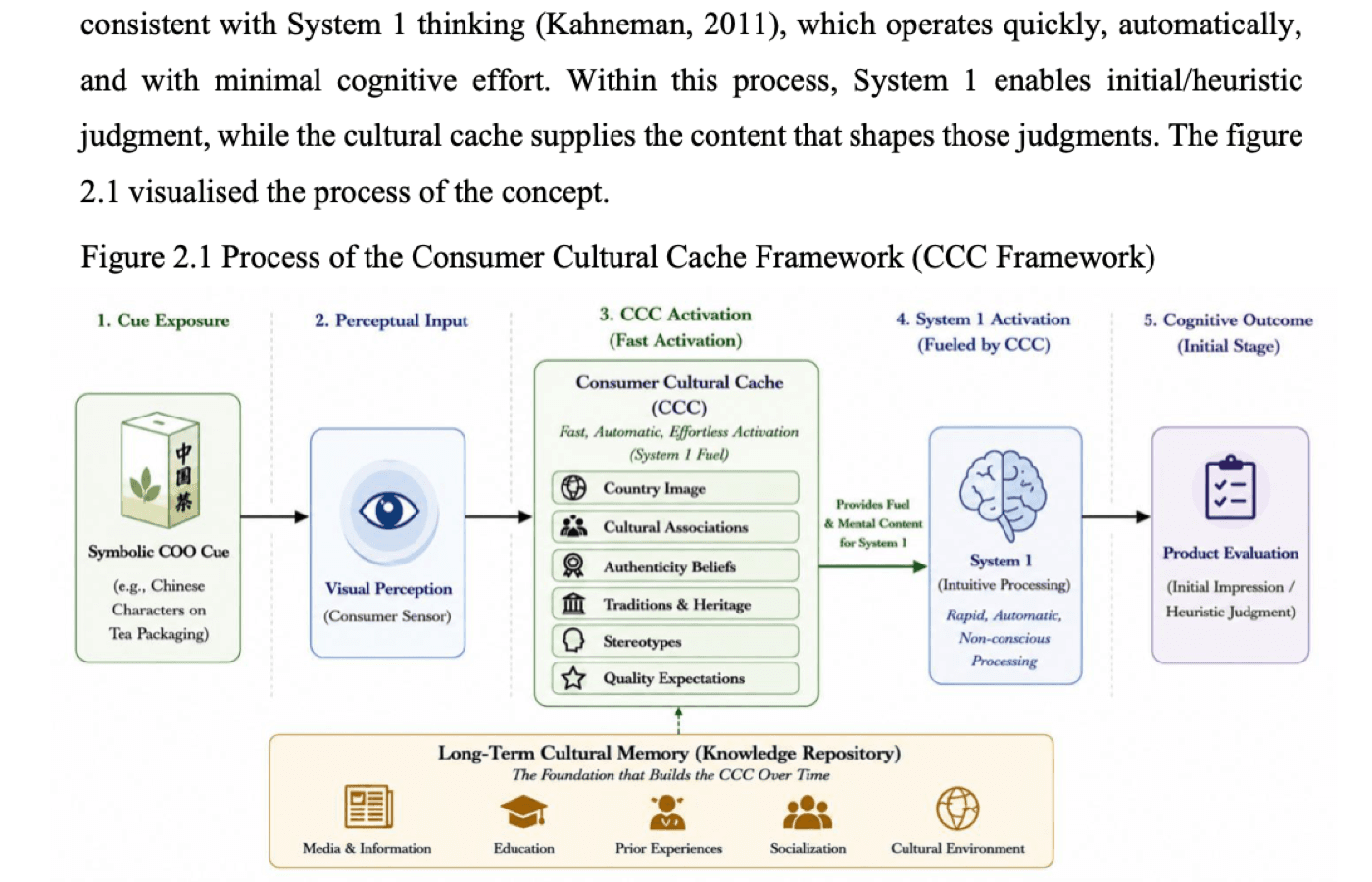
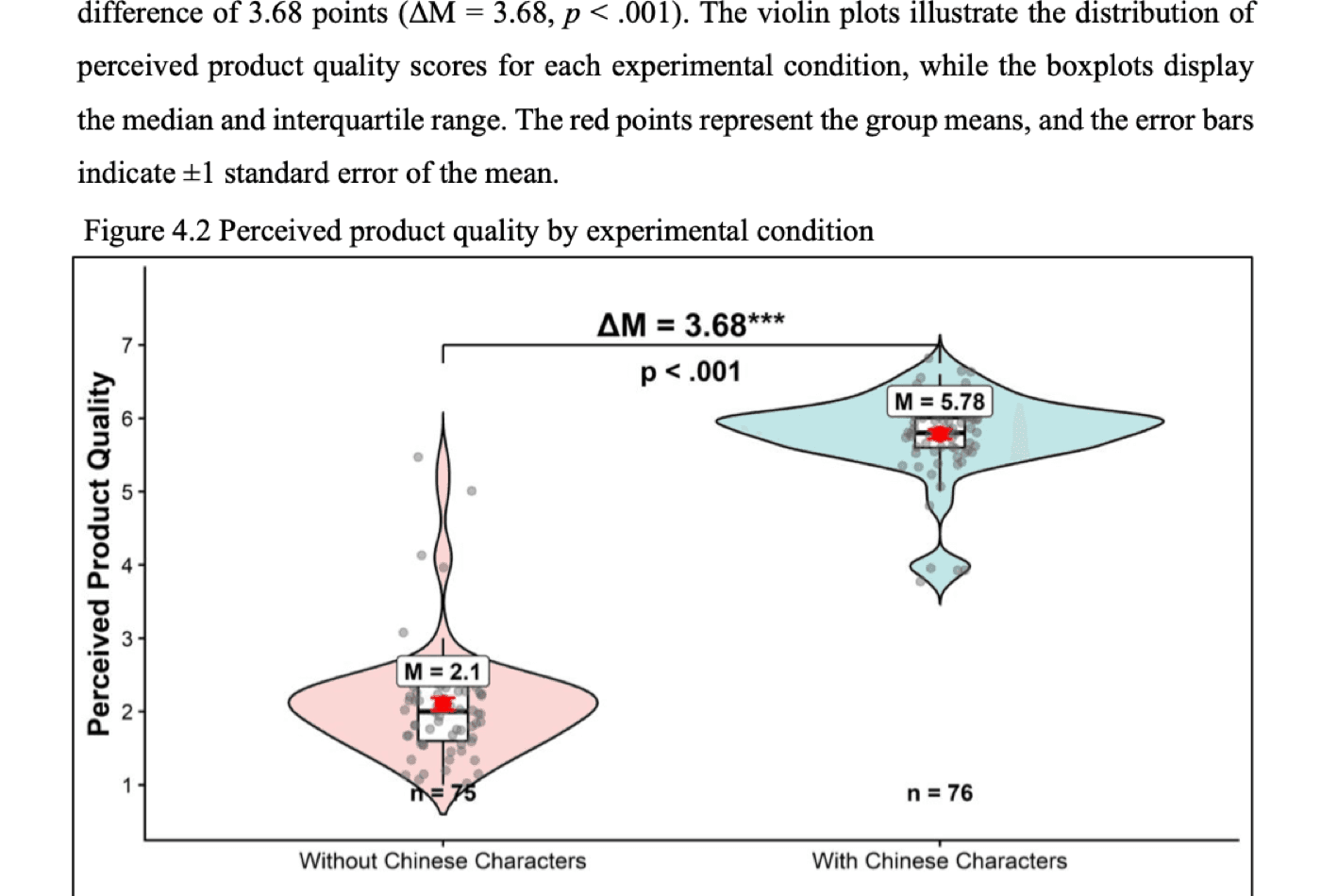
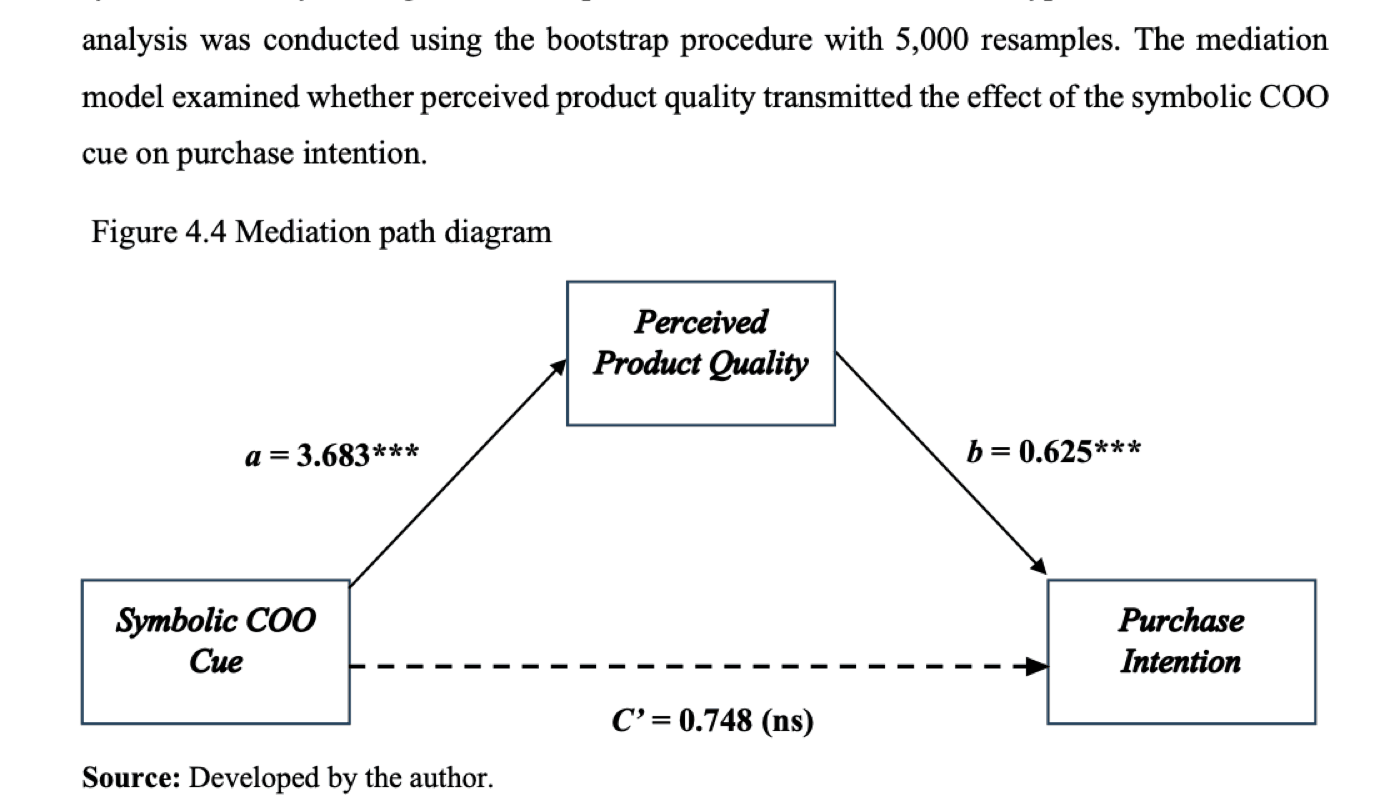
Experimental consumer research investigating whether symbolic country-of-origin cues—specifically Chinese language characters on product packaging—influence consumers’ perceived product quality and purchase intention. The research also examines perceived product quality as a mediating mechanism and consumer ethnocentrism and sustainability concern as moderating factors. It further introduces the Consumer Cultural Cache (CCC) Framework to explain how culturally embedded knowledge and associations can shape consumer responses to symbolic marketing cues.
Quantitative between-subjects experimental research using fictional Chinese tea packaging, where explicit country-of-origin information was held constant while the presence of Chinese characters was manipulated. The study collected 151 valid responses from tea consumers living in Germany through Qualtrics. Data were analyzed in R using independent-samples t-tests, reliability and correlation analysis, regression analysis, mediation analysis, and moderation analysis.
Research at a glance.
Selected frameworks, experimental materials, and results from the original study.