Research Project / AI Regulation & Human-AI Interaction
Does AI Regulation Increase Public Trust? Risk Perception under the EU AI Act
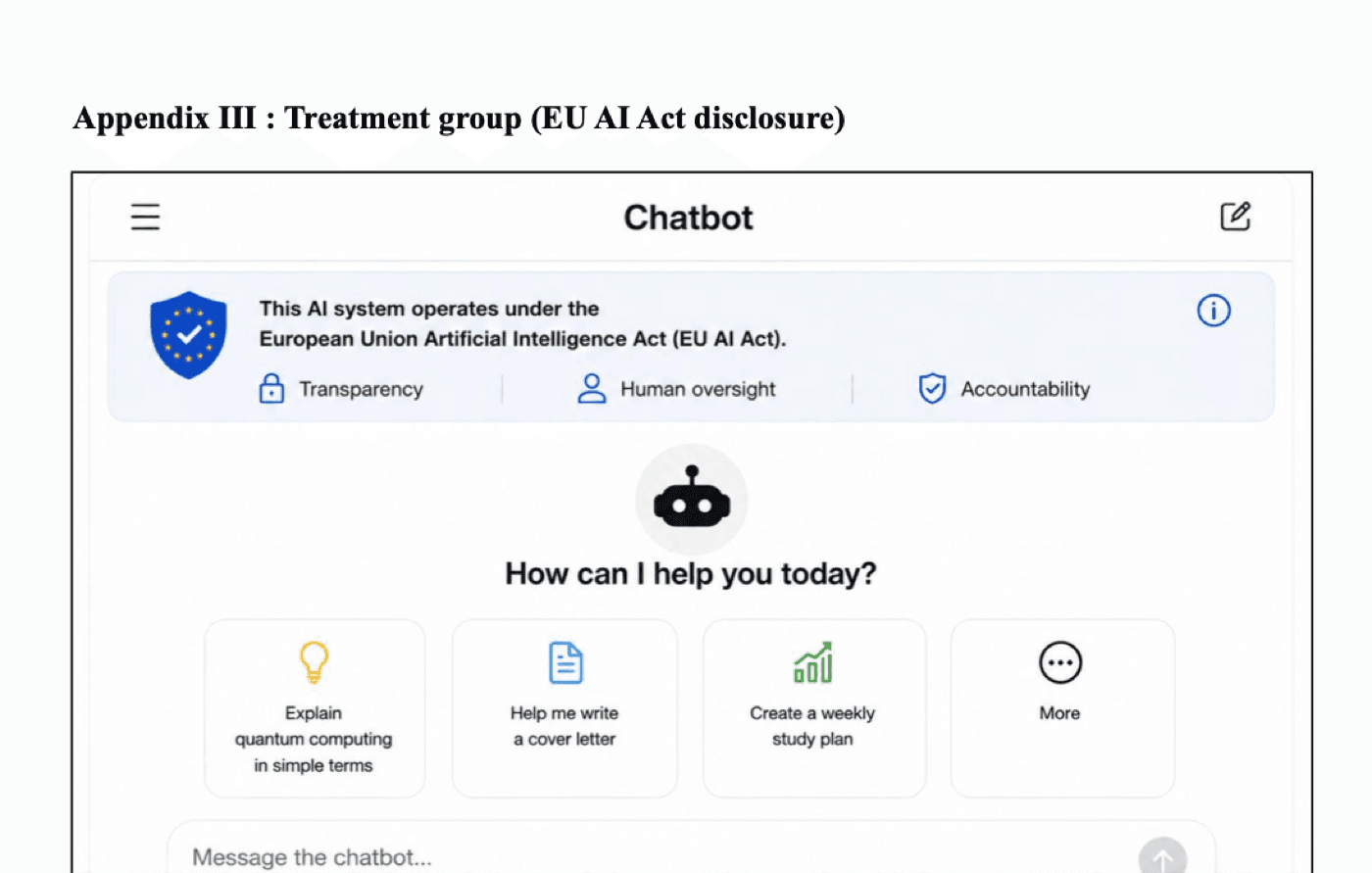
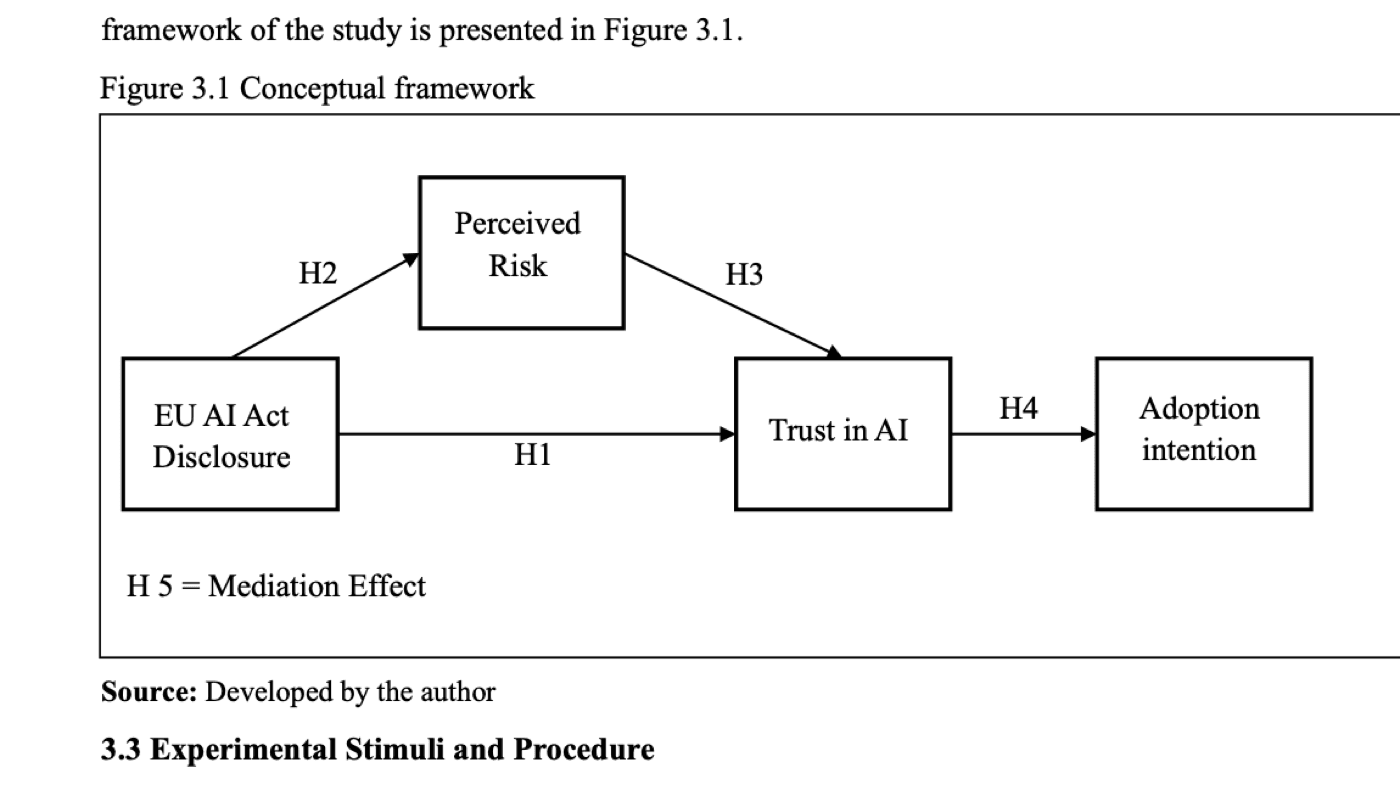
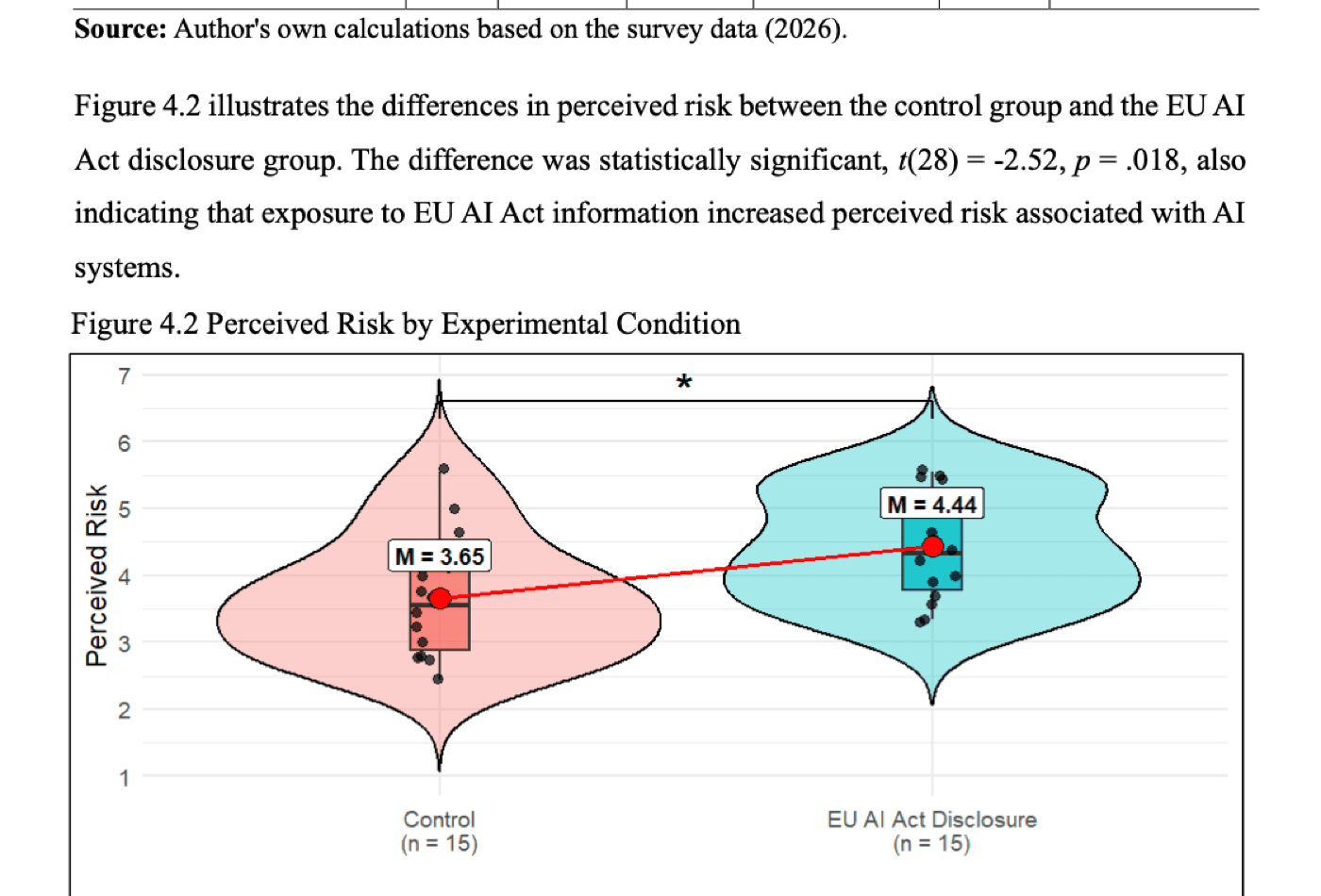
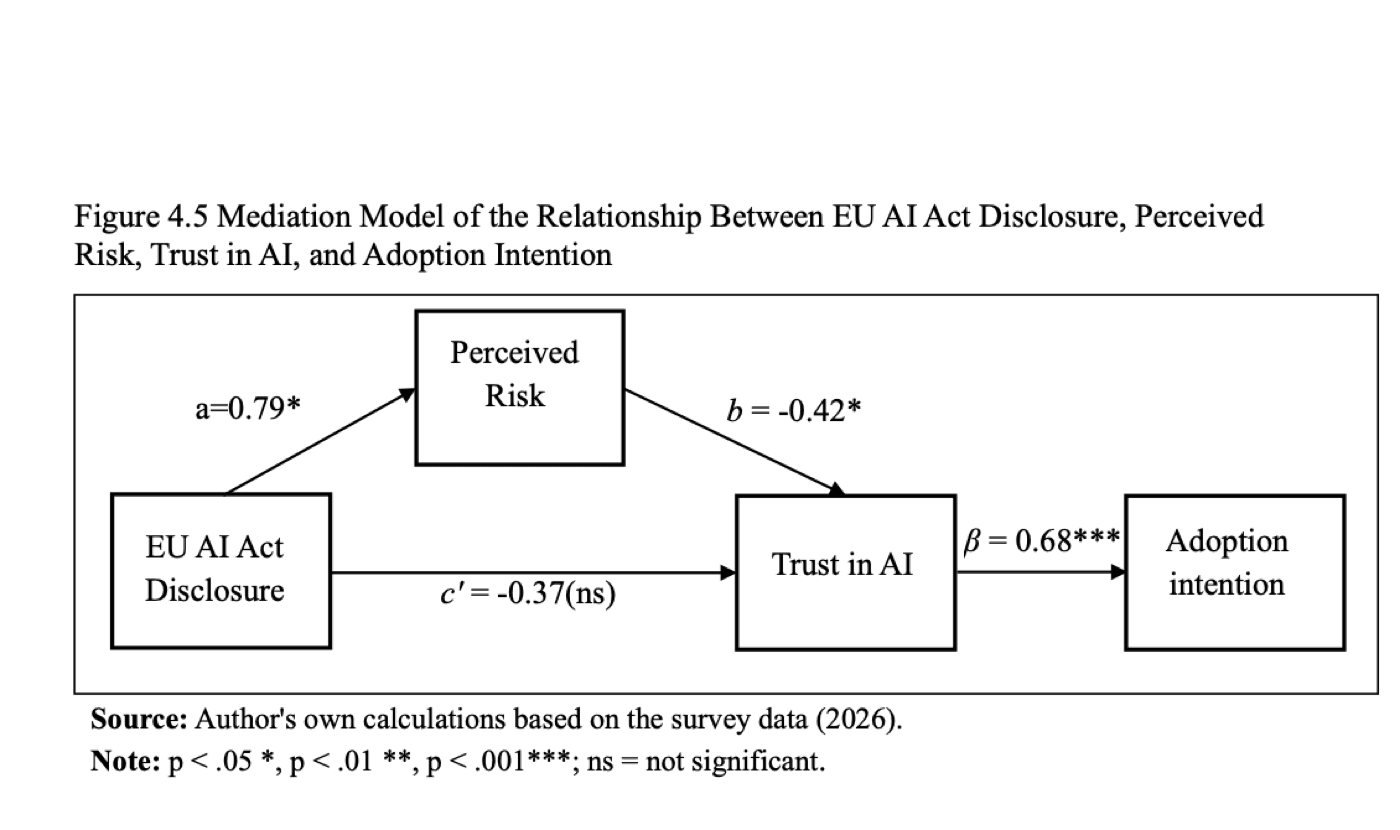
Experimental research investigating how EU AI Act disclosure influences perceived risk, trust in AI systems, and adoption intention among Generation Z users. The study examines whether regulatory transparency strengthens public confidence in AI or instead acts as a risk signal that increases perceived risk and reduces trust.
Quantitative between-subjects experimental study with 30 Generation Z participants, randomly assigned to control and EU AI Act disclosure conditions. Data were collected through Qualtrics and analyzed in R, applying descriptive statistics, reliability analysis, independent-samples t-tests, correlation analysis, linear regression, and bootstrap mediation analysis.
Research at a glance.
Selected frameworks, experimental materials, and results from the original study.